Catecholamine metabolite reactivity and signaling in heart disease
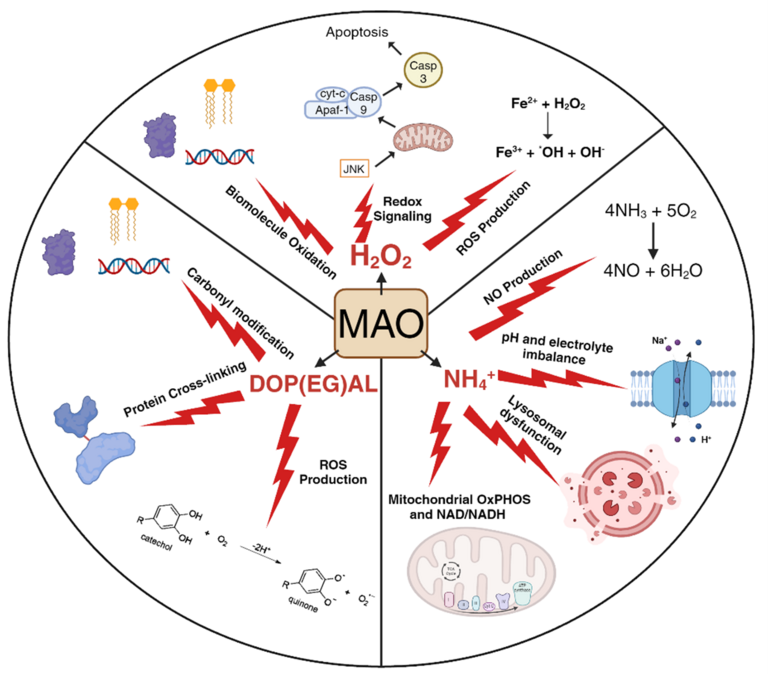
Monoamine oxidase (MAO) is an enzyme tethered to the outer mitochondrial membrane inside all cells of the body, particularly enriched in cardiomyocytes (ie, heart cells). MAO metabolizes neurotransmitters such as norepinephrine (NE), epinephrine (E) and dopamine (DA), which are responsible for controlling heart rate, rhythm and strength of contraction. What has been largely overlooked in the field is that MAO generates hydrogen peroxide (H2O2), ammonia (NH4+), and highly reactive and toxic molecules called "catecholaldehydes". Metabolism of NE generates DOPEGAL, DA makes DOPAL. It has become clear from work by our group and others that all of these metabolites, not just H2O2, are biologically active and individually contribute to disease pathogenesis in the heart. Under physiological conditions, cellular antioxidant enzymes including aldehyde dehydrogenase (ALDH) and aldehyde reductase (AR) detoxify and neutralize these catecholaldehydes. However, under certain disease states such as ischemia, obesity, aging and T2 diabetes, these detoxification pathways decrease while MAO activity in the heart increases. This creates a detoxification bottleneck resulting in significant accumulation of catecholaldehydes and increased oxidative damage in myocardial tissue. (See Figure at right).
Recent studies from our group and others have shown that MAO contributes to cardiac diseases such as cardiomyopathies, arrhythmia, and heart failure. We have ongoing projects in cell and rodent models using gain/loss-of-function and pharmacological tools to investigate these questions (PMID 34609854, 34506109, 38198753. Experimental systems we use for this project include mitochondrial preparations (permeabilized cells and isolated organelles), primary cell cultures (including adult cardiomyocytes and fibroblasts), and electromechanical phenotyping in whole myocardial slices using the IonOptix system.
Clinical/Translational Significance
Our work in this project area has a number of direct clinical and translational applications. Using atrial appendage samples collected during heart surgery, we have:
- Established a link between atrial cardiac MAO activity and postoperative atrial fibrillation (POAF) (PMID 24572256).
- Shown that POAF is associated with a number of clinical and biological variables within the catecholaminergic system, including preoperative plasma catecholamine levels. These variables can be used as biomarkers of POAF risk. (PMID 29430523, 28052357, 26154656, 29808744).
- Shown that patients with obesity & diabetes have >2-fold greater MAO-A,-B content and activity in their atrial tissue compared with age-matched patients without diabetes. Importantly, mitochondrial ATP production in permeabilized myofibers from diabetes patients was suppressed by exposure to norepinephrine (and sensitive to MAO inhibitors), suggesting that the increased MAO activity in these patients contributes to disruptions in mitochondrial OxPHOS (PMID 33066717).
Therapeutic Implications
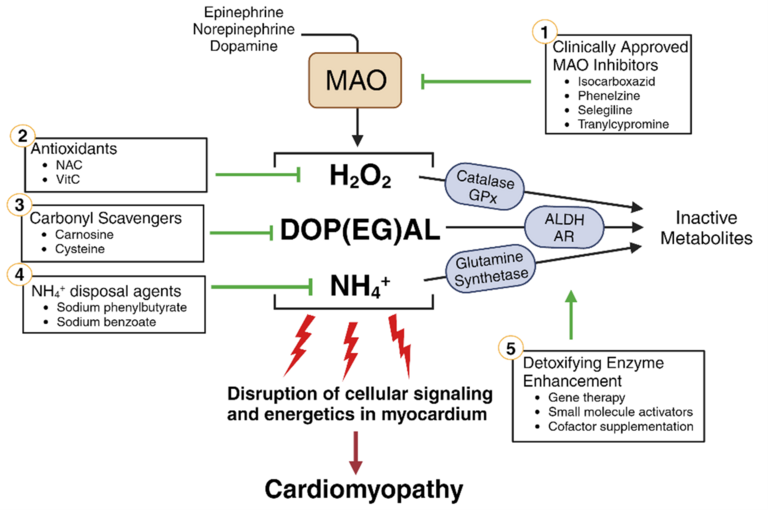
Given the clear link between MAO activity in the heart and its role in heart disease, the Anderson lab is very interested in developing novel drugs to target MAO and its metabolites. Shown in the Figure below are some of the therapeutic strategies available to target MAO and its catecholamine metabolites in the heart, which are of interest to the Anderson lab.